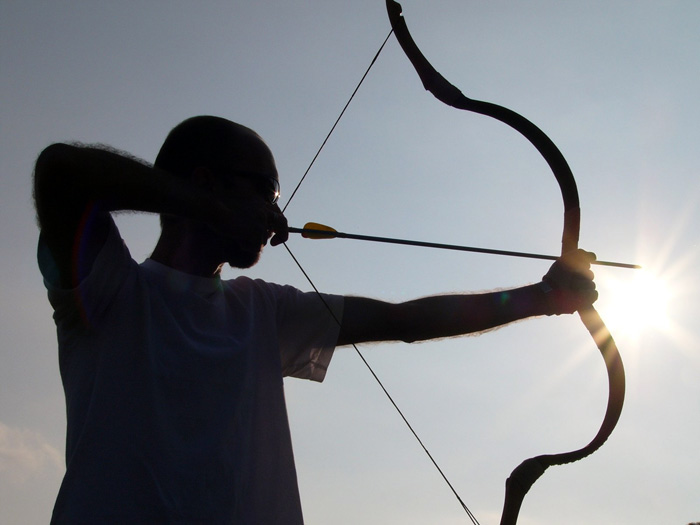
Thousands of years before the Serenity Prayer was written, Stoics were already discussing the implications of it through all aspects of our lives and how to use it to regulate emotions. In this article I will discuss Cicero’s example of the archer and how it relates to the Serenity Prayer for any goal you have in life.
Stoic philosophers realized the need for us to regulate and control our negative emotions. With the central goal of the philosophy being in focusing your life on achieving excellence of character, they realized that negative emotions can lead us down dark paths and bad decisions. This can be particularly harmful when we have goals in life that may not be fully going the way that we want them to go. What the Stoics realized is that it is truly understanding the depth of what we do and do not control that can keep negative emotions like frustration, anger, shame and disappointment from arising in us.
The Archer
Cicero used an example of an archer to explain the concept of control and not having control or in terms of the Serenity Prayer…the things that we can change and cannot change. And yes an archer like someone who uses a bow and arrow. The archer is going to have to shoot at a target.
So what does he have in his control?
Well the first thing he had control over was how much had he prepared before he was going to shoot at the target. He had control over how much time and effort that he put into training up to this point. He has control over choosing the bow that he thinks will work the best for him and maybe even the arrow that he will actually shoot. He can judge the conditions of the environment around him and set up his aim to the best of his ability.
And then he releases and shoots the arrow.
Is he guaranteed to hit the target?
Does he have control any longer?
The archer did everything in his power to aim for that target but whether it hits it or not is no longer in his control…he can’t change it once he has released it from his grip. What if a gust of wind comes out of nowhere and knocks it off its path? What if something moves into the path of the arrow? What if the target was a moving target and it simply moves out of the path?
What This Says About Life
Whether or not the archer hits the target did he not do everything that he had in his control to hit it? If he misses he can reflect on maybe what he learned from the situation so that he might aim differently next time he takes a shot…but the shot is now in the past and things out of his control might have happened that kept him from hitting it.
Many times when we have goals in life and they do not work out for us we can become frustrated and sometimes even get to the point where we just want to quit. This can bring those of us in recovery down paths that could potentially lead to relapse.
The sad realization that the Stoics were trying to convey when they discuss understanding what is in your control and what is not in your control, is that many things in life that are goals for us have an aspect to them that is out of our control. Usually the final part to most of our goals involve someone or something that could get in the path of whether we hit it or not and that is not our fault.
All we can do is our best.
The actual hitting of the mark is to be chosen but not to be desired.
Cicero
What Cicero was saying is that we need to choose our goals in life but we can’t invest all of our emotions into whether we get them or not. When we get to the point of desiring that target it will destroy us if we do not hit it even though ultimately it was in the hands of something outside of our control whether it happened or not. Ask yourself if there were any moments in your life if you drank or used because things did not work out they way that you wanted? If so, was the end results really in your control? This is why you can see it is necessary to understand this to help with your recovery and sobriety.
Choose your goals in life. Do everything that you can to achieve those goals. If you do not hit the target the first time…learn from it and do what is in your control to improve. But ultimately in the end, feel good about yourself for doing the most of what is in your control and putting out your best…whether or not you hit the target.
If you found this article useful feel free to comment below or if you have any questions reach out to me on my contact page. If you want to keep up to date on new articles as they come out follow me on social media at the links at the top or subscribe by email below.
 Derek Castleman: The Sober Stoic